Platform
CR-1: proximity sensing built into every layer of motion.
The CR-1 is a floor-level mobile robot designed to operate inside live retail and logistics aisles without exclusion zones. Payload capacity, sensor coverage, and motion response time are sized for the specific demands of mixed-traffic shared-aisle operation.
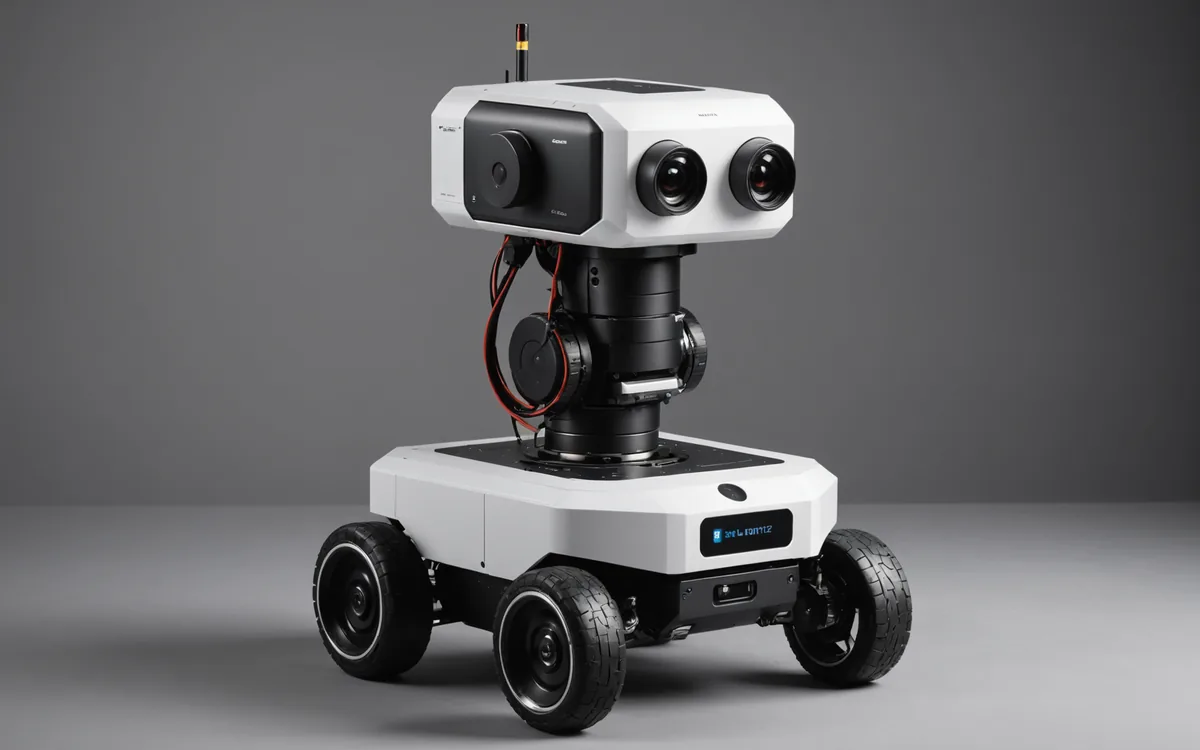
Specifications
CR-1 technical specifications
Numbers for operators planning aisle coverage, not marketing averages. All figures measured in controlled test environments that replicate live logistics-facility conditions.
| Parameter | Value |
|---|---|
| Platform class | Autonomous mobile robot (AMR), differential drive |
| Chassis dimensions | 620 mm (L) x 480 mm (W) x 540 mm (H) |
| Payload capacity | 80 kg (operating load on integrated shelf) |
| Operating speed | 0.8 m/s standard, 0.4 m/s in proximity mode |
| Obstacle response time | 80 ms median (proximity-triggered deceleration to full stop) |
| Floor-contact trigger latency | 40 ms (force-threshold to deceleration command) |
| Ultrasonic proximity range | 0.15 m to 3 m, 360-degree ring (8 sensors, 50 Hz update) |
| Depth camera coverage | Forward 100-degree field, 0.3 m to 6 m range, 30 fps |
| Floor-contact sensor array | 4 pressure pads integrated into wheel base, 16-bit resolution |
| Onboard compute | ARM-based SoC, 8-core, 16 GB RAM, dedicated motion-planning accelerator |
| Battery runtime | 8 hours at standard load (operating cycle); hot-swap battery supported |
| Charging method | Autonomous dock charging; external charge port |
| Connectivity | Wi-Fi 6 (802.11ax), optional 4G LTE module |
| Fleet API | MQTT v5 + REST, JSON payloads, TLS 1.3 |
| Map format | On-device SLAM; imports PNG/SVG floor plan overlays |
| Aisle clearance minimum | 900 mm clear width (1200 mm recommended for bidirectional) |
| Floor surface | Smooth concrete, epoxy-coated concrete, sealed tile |
| Operating temperature | 5 C to 40 C |
| IP rating | IP 42 (dust and splash protection) |
| Weight | 68 kg (without payload) |
Sensing architecture
Three independent layers. One fused decision.
Each sensing layer addresses a specific failure mode. No single sensor handles every aisle scenario; the three layers cover each other's blind spots so the motion planner always has reliable spatial information.
Ultrasonic proximity ring
Eight ultrasonic transducers mounted around the chassis perimeter detect moving bodies from 0.15 m to 3 m at 50 Hz. The ring provides 360-degree coverage, catching approach vectors that a forward-facing camera misses, including lateral and rear approaches in crowded pick areas.
Depth camera zone
A structured-light depth camera builds a dense occupancy grid of the aisle ahead at 30 fps. Resolves foot and lower-leg positions with 15 mm accuracy at 2 m distance, distinguishing a picker's stationary feet from mid-stride movement to plan appropriate deceleration curves before contact range.
Floor-contact force feedback
Four pressure-sensing pads in the wheel base detect unexpected contact forces: a dropped bag, a crouching child, a pallet foot that wasn't on the map. When force exceeds threshold (calibrated per floor surface), deceleration triggers within 40 ms independent of camera and ultrasonic state, providing a final-layer backstop.
Integration
Plugs into your WMS. No lane reconfiguration.
The CR-1 fleet API uses standard protocols already present in most warehouse management and control systems. You dispatch tasks the same way you would to any other automated handling device. The robot figures out aisle navigation; your WMS keeps managing inventory logic.
// MQTT topic: crb/fleet/{fleet_id}/task/create
{
  "task_id": "t-2026-04-28-0042",
  "robot_id": "cr1-fukuoka-03",
  "type": "transport",
  "origin": {
    "zone": "aisle-B4",
    "slot": "B4-12"
  },
  "destination": {
    "zone": "dispatch-bay-2",
    "slot": "bay2-out"
  },
  "priority": 2,
  "prox_mode": "standard"
}

// Status callback: crb/fleet/{fleet_id}/robot/{robot_id}/status
{
  "task_id": "t-2026-04-28-0042",
  "state": "proximity_adjust",
  "position": { "x": 14.2, "y": 8.7 },
  "speed_ms": 0.38,
  "prox_event": "lateral_approach",
  "ts": 1745823042
}
Next step
Request the technical datasheet
The full datasheet includes CAD dimensions, sensor calibration data, power consumption profiles, and the complete API reference. Available to qualified facilities teams and systems integrators.