Company
We spent two years in the aisles before we built the robot.
Closer Robotics was founded in Fukuoka in 2024 by researchers who studied human-robot coexistence in real logistics facilities. The research question was narrow: what makes a robot feel safe to work beside, and can that property be engineered reliably? Closer is the answer.
Origin
Why proximity sensing, why now
The first mobile service robots in logistics facilities went to work behind barriers. The assumption was that a robot moving at speed in a warehouse was too unpredictable for workers to share space with safely. Physical separation was the answer, and for the first generation of large-format AMRs handling pallets at 2 m/s, that was reasonable.
The problem is that barriers freeze a facility's floor. A caged robot zone costs between $80,000 and $200,000 to install, takes 10 to 14 weeks to reconfigure, and eliminates 25 to 35 percent of usable aisle space in a typical logistics floor. Retail operators with seasonal resets or weekly floor changes can't live with that constraint. Floor-level pick-and-replenishment operations, where robots need to work in the same aisles as picking staff throughout a shift, need a different approach entirely.
Shota Higuchi spent 2022 and 2023 at Kyushu University's robotics lab studying the specific question of what makes a mobile robot feel predictable and non-threatening to a worker who has to share an aisle with it. The research involved placing observers in distribution centers and tracking workers' behavioral responses to automated equipment over 6-week periods. The finding was consistent: workers adapted quickly to robots that reliably responded to them, and stayed wary of robots whose motion felt independent of human presence.
The engineering challenge is making "reliably responds to humans" something you can specify, test, and certify, not just observe as a behavioral pattern in a pilot study. That's what the three-layer sensing architecture and the SIL 2 stop chain are about. Closer Robotics K.K. was incorporated in Fukuoka in 2024 with the goal of turning that research insight into a production platform.
Angel funding of $1M closed in February 2026. The CR-1 is in active pilot deployment with two logistics operators in Fukuoka as of Q2 2026. The second pilot cohort is open.
Team
Three people, three specializations
Closer Robotics is a focused team. We are not trying to be a large company building many robot types. We are three people solving a specific proximity problem in logistics aisles, and we built Closer to do that well before expanding scope.

Shota Higuchi
CEO & Co-Founder
Shota's background is in human-robot interaction research at Kyushu University, with a focus on pedestrian-robot coexistence in mixed-use environments. He spent two years embedded in logistics facilities studying how workers respond to automated equipment before founding Closer. He leads product direction, safety architecture, and customer relationships. Based in Fukuoka.
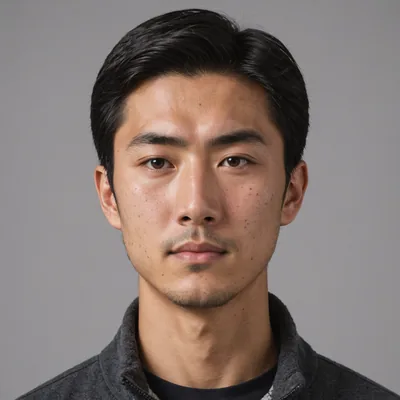
Haruki Tanaka
Hardware Engineer
Haruki designed the CR-1 chassis and the sensor integration that makes the proximity ring work at production tolerances. His background is in embedded systems for mobile robotics platforms developed at Kyushu University's robotics lab. He owns the mechanical design, sensor calibration, and manufacturing specification for the CR-1 platform. Also based in Fukuoka.

Mei Nakamura
Software Engineer
Mei built the motion planning system that fuses the three sensor streams into a real-time velocity and heading output. Her background is in control systems and real-time embedded software for robotic platforms. She owns the sensor fusion stack, the motion planner, the fleet API backend, and the operations portal. Based in Fukuoka.
Funding
Angel-backed. Not growing fast, growing right.
Closer Robotics closed a $1M angel round in February 2026. The round was raised from logistics-industry operators and robotics hardware investors who have direct experience with the floor-level deployment constraints that Closer is designed to solve.
We are not raising for scale. We are raising for correctness: the capital covers the certification costs for ISO 13482 and UL 3100, the second pilot cohort, and the engineering resources to harden the CR-1 platform based on data from live deployments. The next funding milestone is 2027, contingent on pilot completion and certification milestones.
We are transparent about our stage because it matters to operators evaluating a long-term technology relationship. We are a focused early-stage company. We are not an R&D project. The CR-1 is operating in live facilities today. If you are evaluating Closer for a pilot, you should talk to our current operators and form your own view.
Next step
We're taking on the second pilot cohort now
If you are managing a logistics or retail facility and want to evaluate proximity-aware aisle robotics, reach out. We'll have a direct conversation about your floor layout, current workflow, and whether Closer is the right fit.