We get asked a version of the same question fairly often: why Fukuoka? The subtext is usually "why not Tokyo, why not Osaka, why not Singapore?" The answer is specific, not a general endorsement of Fukuoka as a tech hub. It is about what a small hardware team building proximity-sensing robots actually needs day to day, and where those things happen to be available at reasonable cost and reasonable travel time from where we sleep.
This is what we see from roughly 14 months of building here.
Logistics density as a test environment
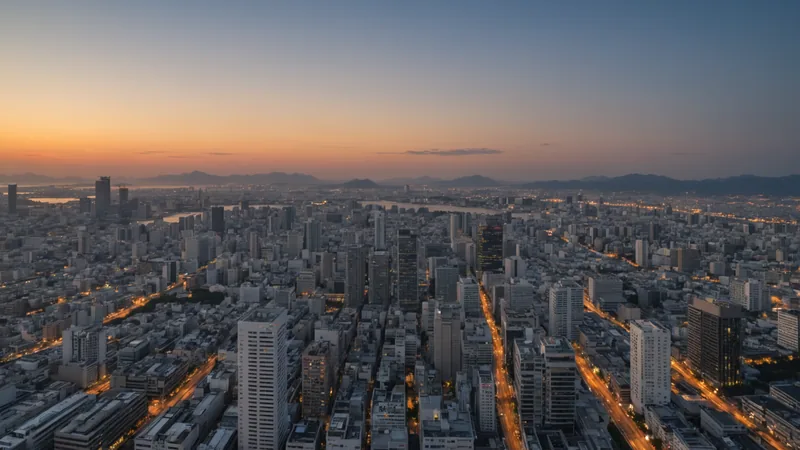
Fukuoka sits at the northern end of the Hakata logistics cluster, which connects the city's port facilities to a ring of 3PL and distribution warehouses in Hakozaki, Kashiihama, and the Fukuoka Kita Industrial Park. That concentration of warehousing and sorting operations within a 20 to 35 minute drive from central Fukuoka is practically useful.
For hardware development, access to real floor environments at the early testing stage is not a given in most cities. You either own a facility, lease test space, or spend months negotiating access agreements with operators who have understandable concerns about running prototype robots near working staff. Fukuoka's density of mid-size 3PL operators -- not the national-scale logistics giants but family-operated and regionally-focused freight and fulfillment facilities -- means those access conversations are shorter. We had a working arrangement with a Hakata-area fulfillment operator within three weeks of asking, and that access produced testing data we could not have collected in a lab.
It is worth being clear that this was not handed to us by any program or policy. It came from a direct conversation between our CEO Shota and the facility manager, both in Japanese, centered on a specific problem: the facility had evaluated a caged autonomous mobile robot from a larger vendor and was concerned about floor space loss. We showed them what proximity-aware operation looks like in a narrow aisle on video. The conversation moved quickly from there.
Manufacturing proximity
One underappreciated practical advantage of Fukuoka is its position within the Kyushu manufacturing ecosystem. Kitakyushu to the north has a decades-old concentration of precision metalworking and electronics assembly suppliers. Kumamoto has semiconductor fabrication and automotive electronics. These are not suppliers we use daily, but knowing that short-run machining, custom injection molding, and PCB assembly are accessible within a half-day roundtrip matters for prototype iteration.
When we needed a revised chassis bracket after a mounting geometry changed in the third hardware revision, we sourced the part from a Kitakyushu supplier with a three-day lead time. In a city with no adjacent manufacturing cluster, that same turnaround might have been two to three weeks from an overseas supplier or an expensive domestic air-freight arrangement.
We are not at production volumes where Fukuoka's manufacturing network is the primary supply chain decision. But for low-volume prototype stages, proximity to rapid-turnaround suppliers is a genuine advantage that shows up in how fast we can close design-test loops.
Talent and the university pipeline
Kyushu University and Fukuoka Institute of Technology both have active robotics and mechatronics programs. Kyushu University's Faculty of Engineering and Faculty of Information Science and Electrical Engineering have graduate research groups working on human-robot interaction, control systems, and sensor fusion -- which is directly adjacent to what we build.
We have one engineer on our team who came directly from Kyushu University's robotics lab. Our experience with the graduate student pipeline here has been straightforward: the students are technically strong, the lab supervisors are accessible for informal conversations, and the university has a technology transfer infrastructure that makes early-stage connections easier to form than in some academic environments. That is a qualified observation based on three to four relationships, not a systemic claim about the city's talent pipeline.
The city's startup support infrastructure also has a practical signal in it. Fukuoka City's "Startup City" initiative and the associated Tenjin co-working and event density are real in the sense that they produce actual encounters with other early-stage hardware and software companies. We have had useful conversations about sensing architectures, battery management, and compliance strategy with teams from two other hardware startups in this ecosystem, neither of which is a competitor. That kind of lateral knowledge transfer happens more easily in a concentrated scene than it does at industry conferences.
What Fukuoka does not offer
The investor base for hardware at the angel and early stage is thinner here than in Tokyo. Japan's hardware robotics investment community is concentrated in Tokyo and to a lesser extent Osaka, with the deep-tech funds, corporate venture arms of the major electronics manufacturers, and the NEDO-affiliated grant programs all primarily networked through the Kanto region.
Our funding conversation was not a Fukuoka story. It was a Tokyo conversation, conducted in person. That required travel. If a company's priority is investor access density in the first 18 months, Fukuoka requires more intentional effort to stay in those networks than Tokyo would.
We have also found that media visibility in the national technology press runs through Tokyo relationships. Announcements that would get covered by a Nikkei journalist or a tech media outlet in a Tokyo-based startup scene may not surface through Fukuoka channels. We have not found this to be a problem for business development, because our customers are facility operations managers, not readers of technology media. But for a company where national press coverage is a priority, location matters differently.
The concrete answer to "why Fukuoka"
The direct answer is: Shota grew up here, Kyushu University was where the initial human-robot interaction research happened, and the logistics access in the Hakata corridor provided test environment proximity we could not have sourced elsewhere without relocating the whole team and starting over on operator relationships.
That combination is not a general recommendation. Another hardware team with different personal geography, different industry focus, and different research roots might find the same calculus pointing somewhere else. What we can say is that the specific needs of a small team building proximity-aware robots in a retail and logistics context are well-served here, and the city's startup density has grown enough that the isolation penalty of not being in Tokyo has narrowed considerably since 2022.
We are still a team of four people, still working through our first full pilot cycle, and still making hardware changes. Where we build from shapes what we can reach, and for now Fukuoka gives us the right reach for the stage we are at.